
Donor Engagement in Churches: How We Invite People to Give Matters
I recently got a new car.
As expected, it came with that crisp new-car scent and all the modern bells and whistles designed to improve comfort, safety and ease of use. But with innovation comes adjustment. I had to learn a new gear selector, new wiper controls, a button instead of a lever for park, and a tailgate that opened onits own. Within a week those changes became second nature. I could hardly remember how I used to do things.
Except for the rearview mirror.
Or rather, what used to be a mirror.
This “mirror” can toggle into a live rearview camera. At first, I tried to embrace the technology. But something about it made me uneasy. After a few drives I switched back to the traditional mirror. It felt more familiar and more comfortable. I could not explain why until a friend offered a simple insight.
The mirror is a reflection. I could see myself. I could see my passengers in the back seat. I could see what was inside the car with me while still looking out a window at what was behind. The camera only showed what was outside. It displayed what surrounded me but not what traveled with me. There was no sense of sharing the same space.
That is when it clicked.
This was not really about a mirror or a camera. It was about perspective.
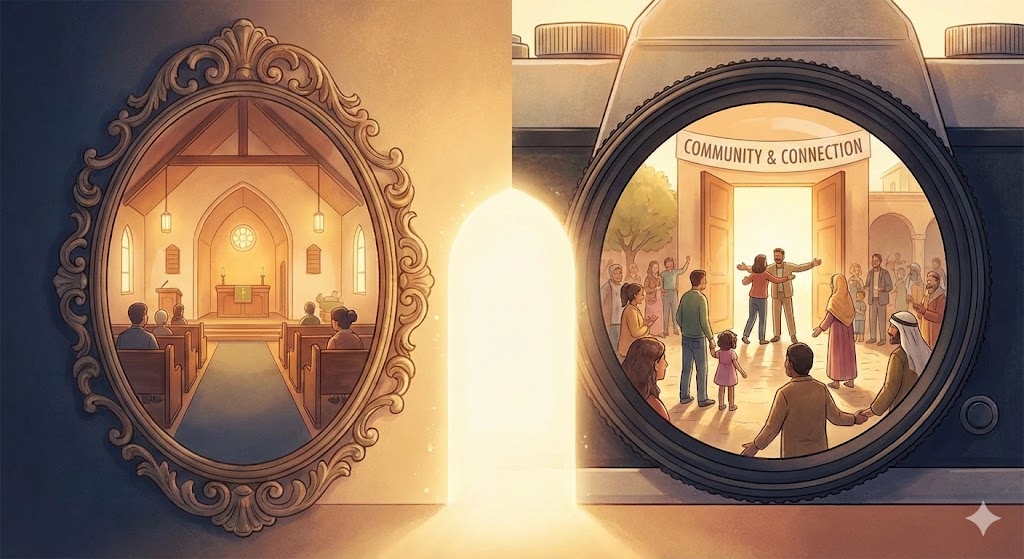
The Mirror View: Looking Inward
A mirror view in ministry reflects what is happening inside the church family. It focuses on our language, our needs and long-held practices. We assume people understand tithing, see giving as an act of worship and know exactly how their money fuels ministry. But when we only look inward, we can lose sight of who is sitting in our pews and what motivates them.
The numbers tell the story. In many congregations across the United States:
- About five percent of givers live with “open-handed” generosity, joyfully giving beyond a tithe and embodying radical trust in God
- Roughly50percent are reluctant or casual donors, giving infrequently or at a minimal level
- The rest fall somewhere in between, steady but not yet fully engaged
If we keep our focus only on the mirror, those numbers rarely change.
The Camera View: Seeing Those Not Yet Inside
A camera view forces us to notice those outside the frame – new guests, spiritual seekers and skeptics who do not yet share our vocabulary or trust.Many are curious and cautious. They may want to participate but do not know how or where to begin.
This matters because most of our potential givers are not yet living radical generosity. If we design giving experiences only for the five percent who are already all in, we unintentionally close the door on the 50 percent who need an invitation and a journey.
A camera perspective prompts questions like these:
- How can we invite people into the mission through their giving?
- How can we create giving opportunities that connect with their passions?
- How do we show where gifts are making a difference before asking anyone to help fund the general budget
Moving from Transaction to Invitation
A mirror view often produces a giving page that looks like a bill-pay screen, perfectly functional for insiders who already understand. A camera view challenges us to craft a giving experience that tells a story and extends a heartfelt invitation. It highlights where gifts go and why they matter, even for someone taking a very first step of faith.
A mirror view assumes everyone is ready for full participation with automatic tithes and sacrificial gifts. A camera view recognizes that many begin with a designated gift to a cause that captures their heart. Over time, trust and discipleship help them embrace deeper generosity. Moving someone from the 50 percent who are reluctant to the five percent who are open-handed requires patient relationship building and spiritual guidance, not just better payment processing.
Generosity as Discipleship
A mirror view treats financial giving as something believers will figure out on their own once they mature. A camera view sees generosity as an essential part of the discipleship process itself, inviting people to grow spiritually as they give and witness God’s mission advancing.
A mirror view keeps your church grounded in its mission. A camera view ensures those outside the faith or on the edge of involvement are welcomed into that mission with clarity, creativity and compassion. Together, they form a strategy that can reshape the giving landscape, helping more than five percent of your people become open-handed givers and encouraging the 50 percent who are reluctant or casual to step into a life of deeper trust and joyful generosity.
The Invitation
It is time to rethink how we lead people in generosity. We must engage not only those who are already committed but also those still on the journey. When we design our giving experiences with the camera view in mind, others feel welcomed, seen and invited into the mission of God.
A mirror helps us remember who we are. A camera helps us see who we are called to reach. Both are essential if we want to cultivate a culture of radical generosity.